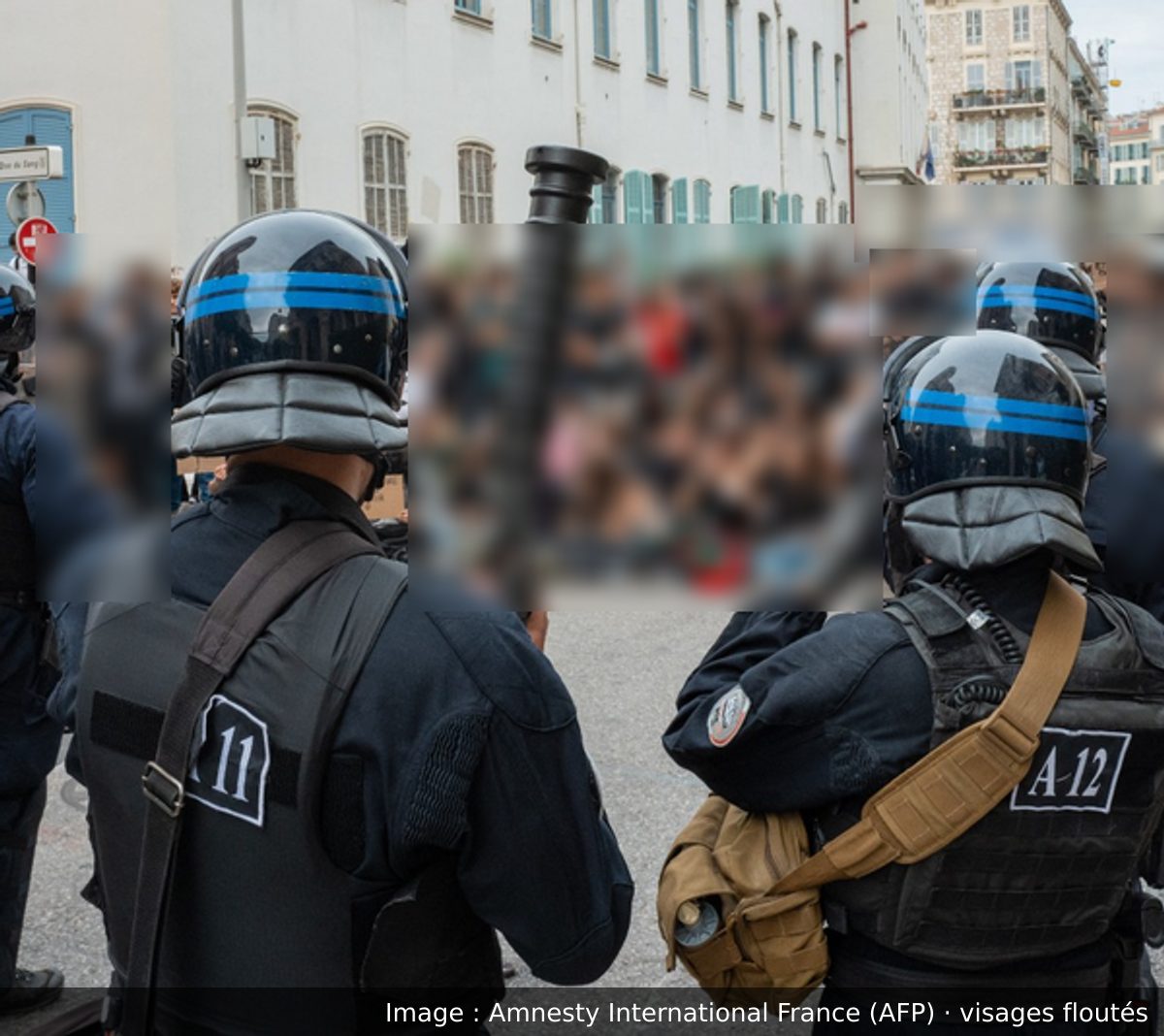
On the morning of Wednesday 30 September 2026, confrontations take place between high-school students and police officers outside the Balzac lycée in Tours. A young person, his face bloody, is taken care of by firefighters on rue d’Entraigues, then taken to the emergency room and operated on in the afternoon (France 3). On the spot, students blame an LBD shot.
The same day, the public prosecutor of Tours announces that she has referred the matter to the IGPN, then states that the eye injuries are “consistent with the impact of a defence round of the LBD type” (translated) (France 3, TF1 Info). The chief of staff of the prefect of Indre-et-Loire calls for caution and announces checks based on body-worn cameras and witness accounts. According to the prefecture, quoted by TF1 Info, the young person was taken care of while law enforcement, who had intervened with the firefighters to put an end to several fires, were being targeted, notably by thrown projectiles.
On 2 October, the prosecutor confirms to the AFP that the student has lost the use of his right eye (AFP, 03/10). Orange, citing BFMTV, writes that he has “permanently” lost the use of that eye (translated); the AFP reports only that he lost the use of the right eye. At that date and in the remarks reported, the prosecutor does not say which shooter or which projectile: she speaks of injuries “consistent” with the impact of an LBD round (translated). Amnesty International France (02/10) repeats these elements and has been calling for years for the suspension of the LBD at demonstrations (the organisation’s position).
Follow-up
The student’s parents file a complaint for “violence by a person holding public authority” (translated): the Tours public prosecutor’s office announced it on the evening of Sunday 4 October (franceinfo with AFP, 05/10, 6:54 a.m.); the student and his mother were heard by the IGPN, whose investigation is continuing (France 3, franceinfo, 05/10). As of 5 October, no identified police officer was implicated and no judicial investigation was mentioned in the articles read (status as of 13 October: see below). The Tours town hall called for calm, judging unacceptable the throwing of projectiles and mortars at law enforcement, while asking for explanations on the conditions of use of force (France 3). The Interior Ministry states on the evening of 5 October that ten investigations have been entrusted to the IGPN since the start of the movement; five of them, announced the previous Friday, notably concerned events in Tours (ICI, Radio France); the same day, the student’s family says that he “is still in hospital” and is doing “as well as can be expected given the circumstances” (translated) (ICI).
On 13 October, four police officers are heard in police custody in Tours by the IGPN; at the end of the day the prosecutor opens a judicial investigation and requests the appointment of several investigating judges (prosecutor’s statement, Actu17). The two police officers who used an LBD are brought before the investigating judges with a view to being formally placed under investigation for aggravated violence: the police officer behind the first shot is formally placed under investigation and placed under judicial supervision, with a ban on carrying and possessing an LBD; the second is placed under the status of assisted witness. According to the prosecutor, this framework allows the victim’s family to become a civil party and all parties to access the proceedings; the investigations are continuing under a rogatory commission (statement).
What the statement says about the investigation at this stage: the forensic doctor, who examined the student in the hours that followed, describes a blunt trauma to the right eye “of high kinetic energy” (translated), consistent with the impact of an LBD round, a total incapacity for work assessed at 30 days “subject to subsequent complications” (translated) and, “after consolidation, permanent disability” (translated). The first rumours of an injury against a wall or the parking meter are not retained: “no trace of blood was found either on the wall or on the parking meter” (translated). Examination of the ten body-worn cameras shows that two LBD shots were fired one minute apart by two different police officers; the investigative acts “show the concomitance of the 1st LBD shot and the injury caused to the eye” (translated) and “also reveal persistent questions about compliance with the conditions imposed by law of absolute necessity and strict proportion for the use of LBDs” (translated).
The defence’s version: the lawyer of the police officer formally placed under investigation tells franceinfo, on 14 October, that “it is not established at this stage of the investigations that the young man’s injuries were caused by an LBD shot” (translated). According to her, her client used his LBD “on one occasion” (translated) while aiming at an individual who was throwing a projectile in his direction, and he says he clearly saw the impact of his round on the flank of that individual, who is not the injured student; she states that the body-worn camera videos corroborate this point. The victim’s version: the student’s lawyer says on France Inter, on 14 October, that “we were not in a context of clashes or urban violence” (translated), that the family has “not really any anger, resentment or hatred towards the police officer who allegedly fired” (translated) and that “we are talking about a permanent disability” (translated); franceinfo adds that the student is doing better but remains in hospital under observation (franceinfo). Both versions are recorded: the prosecutor speaks of “concomitance” (translated) of the first shot and the injury, the defence disputes at this stage the link with its client’s shot. The police officers formally placed under investigation or placed under the status of assisted witness are presumed innocent.